


Belt Conveying Systems
Belt conveying systems are widely used material handling solutions designed to move goods, raw materials, and finished products from one point to another in an efficient, controlled, and continuous manner. They play an essential role in many industries, including mining, agriculture, manufacturing, logistics, food processing, and packaging. By reducing the need for manual transport, belt conveying systems improve productivity, lower labor intensity, and help maintain a steady workflow in production and distribution environments.A typical belt conveying system consists of several key components, including the conveyor belt itself, drive pulleys, idler rollers, a frame structure, a motor, and a tensioning device. The belt is usually made from durable materials such as rubber, PVC, PU, or reinforced fabric, depending on the application and the type of material being transported. The motor drives the pulley, which moves the belt along the conveying path. Idlers support the belt and help reduce friction, while the tensioning system ensures proper belt alignment and stable operation.One of the main advantages of belt conveying systems is their versatility. They can be designed for horizontal transport, inclined lifting, or complex routes with multiple turns and elevation changes. They are suitable for handling a wide range of products, from loose bulk materials like sand, coal, grain, and ore to packaged goods, cartons, and electronic components. This flexibility makes them an important part of modern industrial automation.Another important benefit is efficiency. Belt conveyors are capable of transporting large volumes of material over long distances with relatively low energy consumption. Because the movement is continuous, they help eliminate delays caused by batch handling. This makes them especially valuable in operations that require consistent throughput and precise timing. In addition, belt conveying systems can be integrated with sensors, sorting devices, weighing systems, and automated controls to create smarter and more efficient production lines.Safety and reliability are also major reasons for their popularity. Compared with manual handling or some alternative transport methods, belt conveyors reduce the risk of injury caused by lifting heavy loads. When properly maintained, they offer smooth, stable, and dependable performance. Routine inspections of the belt surface, rollers, drive unit, and alignment are important to prevent wear, slippage, and downtime.Despite their many advantages, belt conveying systems must be carefully selected and designed according to the specific application. Factors such as load capacity, belt speed, material characteristics, temperature, moisture, and operating environment all influence system performance. Proper maintenance is equally important to extend service life and ensure safe operation.In summary, belt conveying systems are a fundamental part of industrial material handling. Their ability to move goods efficiently, safely, and continuously makes them indispensable in many modern operations. With ongoing improvements in automation, durability, and energy efficiency, they will continue to be an essential solution for material transport across a wide range of industries.
製品
カテゴリー:
-
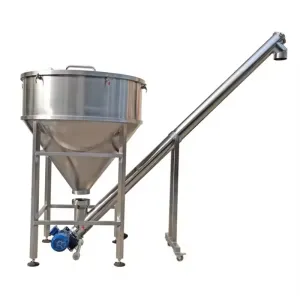
Conveying Equipment
彼らの分類: Feeding Equipmentビュー: 416番号:解放時間: 2026-06-05 08:58:06Conveying equipment provides reliable solutions for industrial material handling, improving efficiency and safety. From belt conveyors to screw conveyors, these systems are designed to transport bulk materials smoothly. Ideal for factories, warehouses, and production lines, conveying equipment optimizes workflow while reducing labor costs and minimizing material damage during transport.
ニュース
カテゴリー:
-
[Blog]Stainless Steel Fermenter vs Glass Fermenter Comparison Guid...
2026-09-15 13:55:27
ケース
カテゴリー:
検索結果はありません!
ビデオ
カテゴリー:
検索結果はありません!
ダウンロード
カテゴリー:
検索結果はありません!
採用
カテゴリー:
検索結果はありません!
おすすめ商品
検索結果はありません!



 電話
電話