Capacity Planning With Ro water purification systems: Buying for the Volume You Will Have, Not the One You Have
Buying RO water purification systems for today's volume is the most common sizing error in procurement â the fleet fitted to last year's demand, either idle or inadequate by the second quarter. The volume that matters is the forecast one, and the forecast deserves as much engineering as the purchase. This guide builds the demand picture first.
Demand forecasting is not fortune-telling; it is a documented estimate with error bands that the purchase can be shaped around. Programmes that buy against the bands flex; programmes that buy against a single number, break on it.
The guidance is based on the experience of é西è¾æ©ä¼¦ç¹é
¿é ææ¯æéå
¬å¸ (www.aelt-brewing.com), which supplies RO water purification systems, Drinking water production lines, industrial water purification equipment to customers worldwide.
Key Specification Factors
Before choosing a product, define the application requirements. These factors determine everything else.
Duty cycle: how often and how hard the product will work.
Environment: temperature, humidity, dust, corrosion and exposure.
Regulatory requirement: the standards that apply in your market.
Interfaces: dimensions, connections and compatibility with existing systems.
Lifetime expectation: the service life you need before replacement.
Maintenance access: how easily the product can be serviced.
Budget versus total cost: the balance between purchase price and lifetime cost.
Primary Applications for Water Treatment And Beverage Processing Equipment
Ro Water Purification Systems and related products are used in a wide range of settings. Understanding the demands of each helps match product to purpose.
Bottled Water Plants: requires reliable performance and appropriate compliance, with duty cycles that vary by application.
Beverage Factories: requires reliable performance and appropriate compliance, with duty cycles that vary by application.
Food Plants: requires reliable performance and appropriate compliance, with duty cycles that vary by application.
Municipal Water Projects: requires reliable performance and appropriate compliance, with duty cycles that vary by application.
In each case the specification should be driven by what the application demands, not by what happens to be in stock.
Matching Product to Application
Different applications place different demands on the same category of product. A configuration suited to light duty will fail quickly under continuous operation, while an over-specified product wastes money.
| Application | Duty Level | Key Requirement | Specification Focus |
|---|
| Light duty | Intermittent | Basic reliability | Standard configuration |
| Medium duty | Regular | Consistent performance | Reinforced components |
| Heavy duty | Continuous | Durability and serviceability | Premium materials |
| Critical duty | Continuous, safety-relevant | Redundancy and compliance | Certified, monitored systems |
Ask the supplier to recommend a configuration for your specific duty level rather than defaulting to the cheapest option.
Environment and Durability Considerations

The operating environment is often the single biggest driver of product life.
Temperature: extreme heat or cold affects materials and lubricants.
Humidity and moisture: drives corrosion and electrical risk.
Dust and particulates: accelerates wear and blocks ventilation.
Corrosive atmospheres: requires specific material grades.
Vibration and shock: demands robust mounting and fastening.
Specify the environment explicitly. A product that performs well in a clean workshop may fail outdoors or in a chemical plant.
Writing a Specification Suppliers Can Quote
A good specification is unambiguous. It states the requirement, the conditions, and the acceptance criteria.
State the application and duty cycle.
List the environmental conditions.
Define the performance requirement.
Specify the applicable standards.
State the interface and dimensional requirements.
Define the acceptance criteria and documentation.
State the packaging and delivery requirement.
When two suppliers quote very different prices, it is usually because they interpreted the specification differently. Precision removes that risk.
Installation and Commissioning
Correct installation protects performance and warranty. Follow the manufacturer's instructions, verify the mounting and connections, and commission the system before full operation.
Ask for installation documentation and, where relevant, on-site support. A supplier who provides clear commissioning guidance reduces the risk of premature failure.
Maintenance and Lifetime Cost
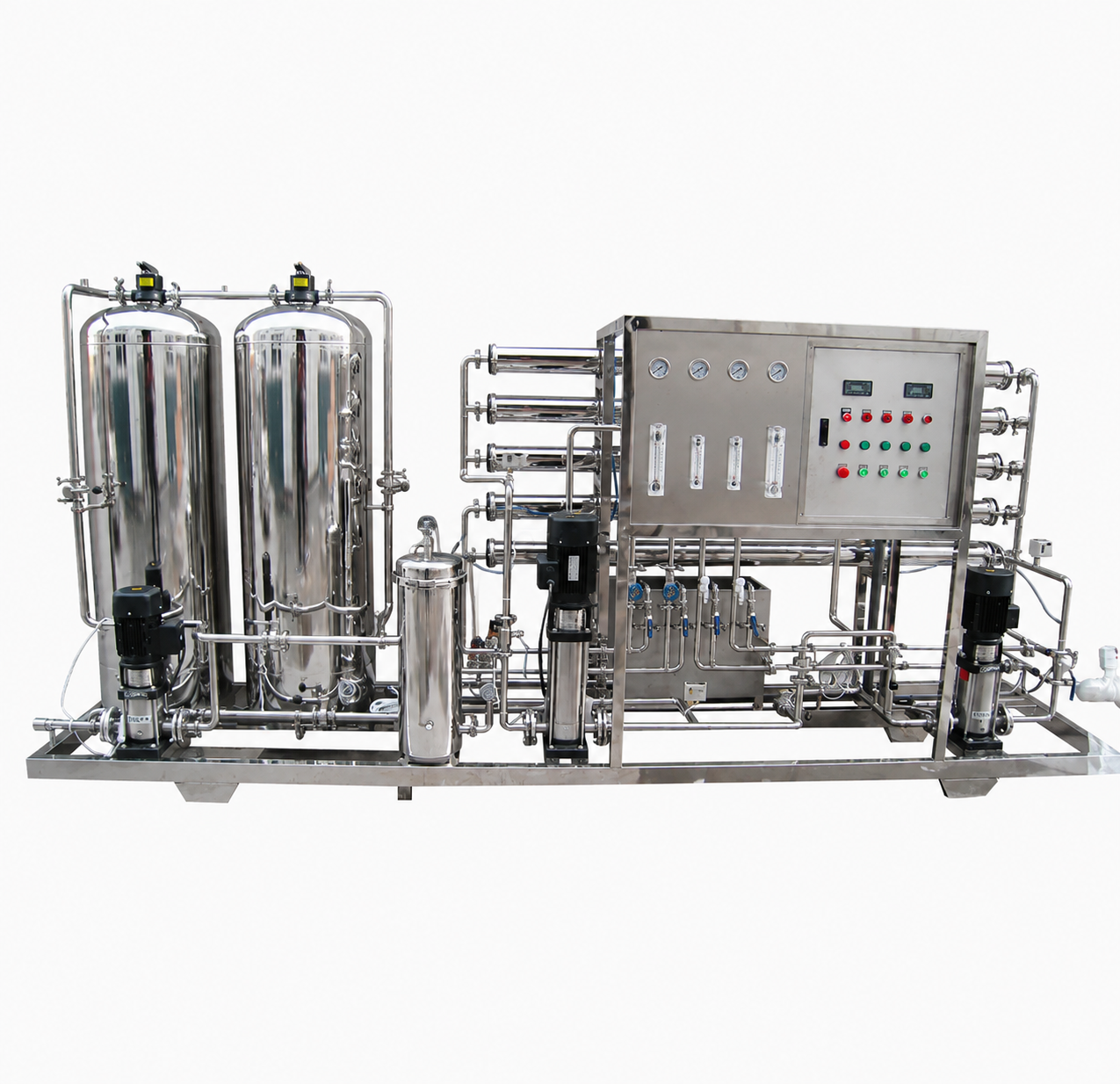
Lifetime cost is driven by maintenance frequency and the availability of spare parts. A product with a slightly higher purchase price but longer service intervals often delivers a lower total cost.
Confirm the recommended maintenance schedule, the availability of consumables and spare parts, and the expected service life under your duty cycle.
Application Matrix
This matrix summarises how requirements change across applications and helps you position the product correctly.
| Application | Typical Duty | Environment | Regulatory Focus | Lifetime Priority |
|---|
| Industrial production | Continuous | Indoor, controlled | Safety standards | Uptime |
| Outdoor and field | Intermittent | Variable weather | Environmental standards | Durability |
| Process and utility | Continuous | Varies | Application standards | Reliability |
| Commercial use | Regular | Indoor | Product safety | Cost of ownership |
| Critical systems | Continuous | Controlled | Certified compliance | Redundancy |
Use the matrix to sanity-check a proposed configuration: if the product's rating does not match the duty and environment, it is the wrong choice even if the price is attractive.
Standards That Govern Each Application
Different applications invoke different standards. Confirm which apply to your use case and market.
WHO drinking water guidelines: confirm applicability to your application and market.
NSF/ANSI 61: confirm applicability to your application and market.
ISO 9001: confirm applicability to your application and market.
CE: confirm applicability to your application and market.
CE: request evidence of compliance where required.
ISO 9001: request evidence of compliance where required.
NSF/ANSI 61: request evidence of compliance where required.
Specifying and Procuring, Step by Step
This sequence turns an application requirement into a delivered product.
Define the application and duty cycle.
List the environmental and regulatory requirements.
Write the performance and interface specification.
Request configurations from two or three suppliers.
Compare proposals against the specification, not against price alone.
Approve a sample and confirm the configuration.
Arrange installation and commissioning documentation.
Establish a maintenance and spare parts plan.
What Should a Ro Water Purification Systems Maintenance Regime Actually Contain â and Who Writes It?
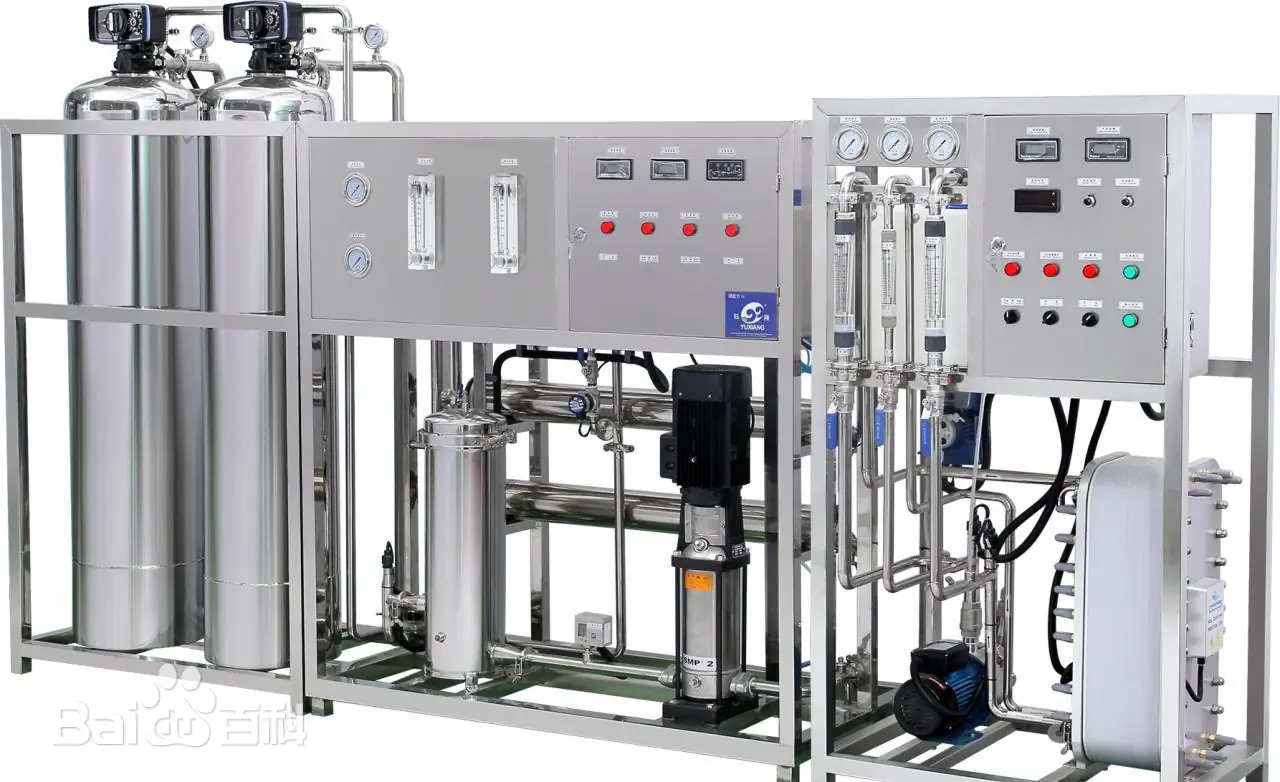
A regime is a calendar, a parts list and a competence plan wearing one cover. The layered structure that holds up in practice:
| Layer | Content | The Failure It Prevents |
|---|
| Daily (operator) | Visual checks, cleaning, lubrication points, log-one-line reporting | The small degradations that become the monthly breakdown |
| Weekly (supervisor) | Wear inspection, fastener checks, calibration spot-verification on measurement-critical items | Drift that daily eyes stop seeing â familiarity is the enemy here |
| Monthly / quarterly (service) | Consumable replacement, alignment, software and firmware updates, deep clean | The efficiency slide that shows up as energy and cycle-time before it shows up as failure |
| Annual (major) | Overhaul items, seal and bearing replacement, safety-system proof testing | The catastrophic failure with the long lead-time part nobody stocked |
| Condition-based triggers | Vibration, temperature, cycle counters â alarms that override the calendar | The regime's own blindness: the unit that fails early despite a perfect schedule |
Demand the regime as a purchase deliverable â written, parts-listed, hour-costed â and score suppliers on it during selection: a supplier who cannot describe the maintenance their product needs is telling you how they will support it later. Internally, cost the regime honestly into the operating budget and assign every layer to a named role, because unowned maintenance is imagination. Finally, feed the log back: a year of one-line daily records is the negotiating document for the next purchase, the warranty claim, and the redesign request â the regime written by the supplier becomes, within a year, evidence written by your own floor.
Frequently Asked Questions
How do I choose between standard and custom configuration?
Start from the standard configuration and identify where your application demands something different. Customization should solve a specific requirement, not add cost without benefit.
How long should the product last?
Service life depends on duty cycle, environment and maintenance. The supplier should be able to state an expected life under defined conditions, and you should verify it against your duty level.
What environmental conditions matter most?
Temperature, humidity, dust and corrosive exposure are the most common drivers of premature failure. Specify them explicitly when requesting a quotation.
Is a higher specification always better?
No. Over-specification increases cost without adding value if your application does not need it. Match specification to duty.
What documentation should accompany delivery?
At minimum, a specification sheet, installation instructions and compliance documentation where applicable. For complex products, request commissioning guidance.
How important is spare parts availability?
Very. A product that cannot be serviced quickly becomes a liability. Confirm the availability and lead time of critical spares before ordering.
Can the supplier help with system integration?
Many manufacturers provide application support and interface guidance. Ask about the level of technical support included.
How do I compare products from different suppliers?
Normalise the specification, then compare on lifetime cost including maintenance and spares. A like-for-like comparison avoids misleading price differences.
One-Page Confirmations: The Habit That Replaces the Meeting Nobody Minutes
Between the quotation and the container sits a fog of conversations â calls, chats, hallway agreements at trade fairs â and the fog is where programmes disagree with themselves later. The one-page confirmation is the cheapest fog-clearing device in procurement:
Three minutes to write, one page maximum: 'confirming our call today â we agreed X, Y and Z, deadline D, owner N. Reply if any of this is wrong.' Length kills the format; brevity is what gets confirmations read.
Sent the same day: a confirmation sent next week arrives as a memory test instead of a correction opportunity; same-day is what makes the receiver's silence mean agreement.
Silence is agreement, explicitly stated: the closing line does the work â 'if I hear nothing by Friday, we proceed on this basis.' Ambiguity about what silence means is the whole reason confirmations exist.
Filed against the order number: a confirmation that cannot be found during a dispute never happened; the file is the format's second half, and the worse-neglected one.
Used for the small things especially: packaging tweaks, finish changes, small date moves â the small verbal agreements are where the big claims are born.
Suppliers adapt to the habit within a month, and the better ones come to prefer it â a written record protects them from their own salespeople's enthusiasm as much as it protects you. The measurable effect appears at claim time: programmes with a confirmation file settle disputes in days against memories, because the argument was pre-empted in writing while both sides still agreed. The format costs three minutes per event; the claims it prevents are priced in the tens of hours. There is no cheaper administrative habit in trade, and none more consistently skipped by programmes that later describe themselves as unlucky.
The Demand Forecast Worksheet: Building the Number the Programme Buys Against

Every purchase is a bet on a forecast, whether the forecast was written or improvised. The worksheet that makes the bet deliberate fits on one page:
| Worksheet Line | What Goes There | What It Changes in the Purchase |
|---|
| Baseline volume | Trailing twelve months by period, seasonality visible | The floor the order cannot logically fall beneath |
| Known changes | Won contracts, lost accounts, promotions, regulations â dated | The adjustments that justify deviating from the baseline |
| Growth band | Low and high scenarios with their reasoning stated | The band the fleet or stock is sized against â never the midpoint alone |
| Error history | Last forecast versus actual, per period | The humility factor: wide past errors widen the band you buy against |
| Flexibility levers | What can be expedited, delayed, or added later, and at what cost | The size of the irrevocable portion â buy flexibility where it is cheap |
The worksheet's discipline is not the forecast's accuracy â accuracy is limited â but the explicitness: a purchase sized against a written band can be defended, adjusted and learned from, while a purchase sized against a hunch can only be regretted. Share the forecast with the supplier even where it is uncomfortable; suppliers who see honest numbers reserve capacity and quote sharper prices, and suppliers fed fiction respond in kind. Review the worksheet quarterly against actuals and re-open the purchase plan when the band is breached â the review costs thirty minutes, and its alternative is discovering the breach inside a container that has already sailed. Programmes that forecast in bands stop being surprised by their own success and their own growth alike.
The Maintenance Schedule as a Purchase Deliverable
Maintenance is promised in brochures and delivered in manuals â if at all. Treating the schedule as a purchase deliverable changes the negotiation before delivery, when leverage still exists:
Require the regime in writing before contract: daily, weekly, monthly, annual tasks with intervals, hours and required parts â the document that exists pre-sale is accurate; the one written post-sale is defensive.
Cost it into the comparison: two machines with different service intervals are different prices wearing the same sticker; the regime's annual hours and parts list make the comparison honest.
Bind support to the schedule: response commitments for breakdowns, parts availability windows, and who trains the crew on the regime â the schedule without support terms is a wish with a table of contents.
Make the log a warranty condition: 'warranty valid when the schedule is followed and logged' protects both sides honestly â and gives your operators a reason for the discipline that protects the asset anyway.
Update the schedule from your own data: after the first year, your log shows which intervals were right; the supplier's revision and your reality converge, and the asset's second life runs on evidence.
The buyer who demands the regime before the order also learns something about the supplier: manufacturers who know their product describe its care fluently and price it honestly, while the ones who improvise a schedule on request have told you what their support will look like after the invoice. Maintenance planning is unglamorous, cheap at selection time and ruinous to skip â which is precisely the profile of a requirement that belongs in the purchase, not in the apology.
The Monthly Programme Review: Thirty Minutes That Replace the Annual Fire Drill
Most procurement surprises are old information that nobody looked at in time. The monthly review is the standing half-hour that converts accumulating data into early warnings â short, agenda-bound, and ruthless about scope:
Five numbers, always the same five: orders in flight, on-time-in-full, open quality items, spend versus budget, and forecast movement. Novel metrics are interesting; constant metrics are comparable.
Exceptions only: anything green is noted in one line and left alone; the meeting lives on the reds and the trend breaks â the discipline that keeps thirty minutes from becoming an afternoon.
One decision minimum: every review must change something â an order expedited, an escalation opened, a forecast revised. Reviews that end with 'keep watching' three months running have stopped being reviews.
Written in ten lines: the decisions, owners and dates, filed with the programme records; the note is what makes the review a system instead of a ritual.
Calendar-protected: the review that moves for everything urgent is the review that guarantees everything will eventually be urgent.
The review's compounding effect is pattern recognition: twelve months of notes turn vague unease into named trajectories â the supplier whose lead times drift each quarter, the defect class that reappears each summer, the budget line that always overshoots in the same month. None of these is visible in any single month; all of them are visible in the file. Thirty minutes a month is the cheapest early-warning system procurement owns, and the one that most programmes replace with an annual retrospective explaining what the monthly reviews would have caught.
The Normalised Price Book: Your Own Cost History as a Negotiation Instrument
Every buyer has a price history; few have a price book. The difference is normalisation â costs adjusted so that like compares with like across years, quantities and specification changes. The book is one table per product:
| Column | What It Holds | Why It Matters at Negotiation Time |
|---|
| Period and PO reference | Date and order linkage | Turns the table from folklore into evidence with receipts |
| Normalised unit price | Price adjusted to today's specification and volume basis | The comparable number â raw prices lie quietly whenever scope changed |
| Input-cost context | Raw material index, freight rate, currency at the time | Separates 'the market moved' from 'the quote moved' â the question every negotiation turns on |
| Scope notes | What the price included: inspection, packaging, terms | The footnote that ends the 'it used to be cheaper' argument honestly, both directions |
| Movement and reason | Change versus prior entry and its driver | The trend line that reveals whether your costs are managed or merely experienced |
Maintained quarterly, the book changes the texture of price discussions: requests for increases meet a documented context instead of a shrug, and genuine input movements get indexed rather than argued, because the history shows you have always been fair about market-driven changes. The book also disciplines your own memory â buyers systematically remember old prices as lower than they were, and suppliers know it. An afternoon of setup and fifteen minutes a quarter is the entire cost; the instrument it buys is the difference between negotiating with data and negotiating with anecdotes, and everyone in the room can tell which is which.
The Claims Reserve: Budgeting for the Percentage That Will Go Wrong

Procurement budgets are usually written as if reality were contractual. It is not, and the claims reserve is the honest acknowledgement: a named allocation for the damage, delay and dispute that every programme experiences statistically if not predictably. Setting it up:
Size it from your own history, not from hope: the last two years of claims, chargebacks and expedites as a percentage of programme spend â your number, not an industry folklore number.
Ring-fence it mentally if not financially: the reserve is not slack to be spent on nice-to-haves; it exists so that the bad month does not cascade into cuts that cause the next bad month.
Log every draw-down with its cause: the reserve's ledger is the programme's true risk profile â where the money actually goes teaches more than any risk register workshop.
Review the sizing annually: a reserve that never draws is capital parked; one that always exhausts is a budget in denial â both readings adjust the number and, more importantly, the behaviour.
Let it fund prevention when patterns repeat: the reserve's best use is the year it shrinks because its ledger identified a recurring cause worth fixing at the source.
The reserve's psychological value matches its financial one: buyers with a reserve decide calmly during incidents, because the money question is pre-answered; buyers without one make their worst decisions under invoice-shaped pressure. Finance departments, once shown two years of actual claims data, typically approve the line eagerly â it converts their unquantified exposure into a managed number. The reserve does not attract misfortune; it only attracts honesty about how often fortune misbehaves, which is the first prerequisite for reducing it.
Questions Buyers Ask About Water Treatment And Beverage Processing Equipment Programmes â Answered
How early should I start qualifying a backup supplier?
Six to nine months before you might need them, which in practice means: start when the primary relationship is healthy, not when it wobbles. Qualification â samples, trial order, first-volume order â takes two to four production cycles, and doing it under deadline pressure produces exactly the hasty evaluation it is meant to prevent. A backup qualified early also disciplines the primary invisibly: nothing improves supplier responsiveness like the buyer who demonstrably has somewhere else to go.
Can I ask for exclusivity before volume is proven?
You can ask; a serious supplier will usually decline, and both positions are reasonable. Exclusivity costs the supplier their other customers, so pricing it requires proof your volume justifies the sacrifice â which is why the sane sequence runs the other way: prove the volume first, then negotiate the right, on defined territory, defined term and defined performance conditions. Exclusivity granted early is either priced into your unit cost or quietly hollowed out with side sales; both outcomes cost more than patience would have.
Is a first article inspection needed on repeat orders?
Not fully â but something should sit in its place. For unchanged products on unchanged tooling, a condensed verification (key dimensions, material certificate, appearance against the approved reference) confirms the process has not drifted, at a tenth of the cost. A full re-inspection belongs wherever the inputs change: new tooling, new material source, new factory, or after any long production gap. The principle is that the first article approves a process, not a product â so the re-check follows the process's risk of change, not the calendar.
Who keeps the FTA origin documents after the shipment clears?
Both sides keep their half, for years: the exporter retains the production and material back-up supporting the certificate, and the importer retains the claim documents and their copy of the certificate â typically five years, per the agreement and local customs law. The retention is not archival sentiment; preferential claims are audited retrospectively, and the audit arrives as a records request with a deadline. A qualification file per product, updated per shipment and stored where someone can find it in an afternoon, is the entire requirement.
Should maintenance be built in-house or contracted out?
Split it by consequence, not by difficulty: in-house what affects daily output â cleaning, lubrication, minor faults, the quick response that prevents a shift's loss â and contract what needs depth â annual overhauls, calibration, safety-system work. The in-house layer needs training and a parts minimum-stock; the contracted layer needs a response-time commitment and your maintenance log shared, because a service partner who sees only the breakdown sees half the machine. The expensive mistake is full outsourcing of the daily layer, which buys slow responses to small problems and lets small problems grow into contracted ones.
Application Support
If you are specifying water treatment and beverage processing equipment for a particular application, é西è¾æ©ä¼¦ç¹é
¿é ææ¯æéå
¬å¸ (www.aelt-brewing.com) can help match the product to your duty cycle and environment. Visit www.aelt-brewing.com to discuss your requirement and request a specification proposal.
 +86 29-87031531



 電話
電話
コメント
(0)